


Reducing Light Pollution in Your Observing Area
Why light pollution matters when you're looking at the Moon
It surprises a lot of people that the Moon — the brightest object in the night sky — is affected by light pollution at all. Surely, if anything can cut through a glow, it's the Moon? In practice, the problem isn't seeing the Moon, it's seeing detail on it. Stray light washing across your telescope or binoculars reduces contrast, and contrast is everything when you're tracing the jagged line of the lunar terminator, picking out crater rims, or waiting for a shadow to creep across a crater floor.
The same applies to the brighter planets. Jupiter's cloud belts, Saturn's rings and the polar caps of Mars all live at the edge of what your eye can detect, and every stray photon from a security light or a neighbour's kitchen window makes them a little harder to tease out. The good news is that you don't need a remote dark-sky site to improve things. Most UK gardens can be noticeably improved with an evening's work and a few cheap, sensible changes.
Shield and redirect your own outdoor lighting
Start with the lights you actually control. A security light blasting sideways across your patio is doing nothing for safety and everything to ruin your dark adaptation. The aim is simple: light should go down, not out.
- Fit a shield or cowl to any wall-mounted light so the beam is directed at the ground. Many fittings accept a simple clip-on cowl, and a home-made version from a piece of stiff plastic or an old plant pot works surprisingly well.
- Check that passive infrared sensors are aimed at your path or drive, not at the sky or your observing spot. A sensor that triggers every time a cat walks past is worse than useless.
- Replace cool-white bulbs with warmer, lower-output ones where you can. A 2700K bulb at a lower wattage puts out far less glare than a harsh daylight-white equivalent.
- If you have decorative garden lighting — fairy lights, uplighters on a tree, a lit water feature — put them on a timer or a switch indoors so you can kill them at the start of a session.
- Consider a simple motion sensor with a short on-time. Thirty seconds is plenty for finding a keyhole; five minutes will follow you around all evening.
Curtains, blinds and the indoor light leak
It's easy to forget that your own house is often the biggest offender. A lit hallway, a bathroom window, a landing light left on for the stairs — all of it spills into the garden and straight into your eyepiece. Before you set up, do a quick circuit of the house and close every curtain and blind on the garden-facing side. Thick, lined curtains make a real difference; if yours are thin, a cheap blackout liner is one of the best-value upgrades for a garden astronomer.
Ask anyone else in the house to use a lamp rather than a ceiling light in rooms facing the garden, and if a door has to be opened, close it behind you. If you observe from a spot where a particular window is unavoidable, a simple screen — a sheet of plywood, a folding windbreak, even a clothes horse draped with a dark blanket — can block the worst of it.
Finding the darkest corner of your garden
Not all parts of a garden are equal. Spend a few minutes on a clear evening walking slowly around with the house lights off and see where the sky looks darkest and where glare from streetlights and neighbouring windows falls. You'll often find that one corner — behind a shed, under a tree, against a tall fence or hedge — is markedly better than the rest.
Set up there. A hedge or fence blocks low-angle light from the street, and a shed or garage wall does the same job on one side. You don't need a perfect horizon; for lunar and planetary work you're usually looking well above it anyway. What matters is that your eye, and the front of your telescope, aren't pointed towards a bright surface. Even a white-painted wall reflecting a streetlight can be a nuisance, so angle your setup so that any lit surface stays behind you.
Dealing with neighbours' lights and streetlights
You can't control everything, but you can be diplomatic and practical. A friendly word often works wonders: most people have no idea their outside light is visible from three gardens away, and many are happy to switch to a shielded fitting or a lower wattage once it's explained. If a conversation feels awkward, a polite note usually does the job.
For lights you can't change, use geometry. A portable observing screen, a dark tarpaulin on a frame, or simply positioning yourself so a fence post or shrub blocks the source can make a surprising difference. Many observers also keep a black cloth or hood over their head while at the eyepiece, which blocks peripheral glare and genuinely improves what you can see.
Habits that protect your night vision
Shielding your site is only half the battle — you also need to protect your eyes. It takes around twenty minutes for your eyes to fully adapt to darkness, and a single white torch beam can undo it in a second.
- Use a red torch only, or a red filter over a normal one. Red light preserves dark adaptation far better than white.
- Dim your phone screen, use night mode, and avoid checking it at all if you can.
- Observe with both eyes open where possible, or keep the non-observing eye closed gently rather than screwed shut.
- Give yourself twenty minutes of darkness before you expect to see fine lunar detail. The difference between the first minute and the twentieth is remarkable.
- Observe when the Moon is higher in the sky, above the worst of the low-level glow from towns and street lighting.
None of this requires an expensive overhaul. A cowl here, a curtain drawn there, a spot chosen with a little thought — and the Moon, along with Jupiter and Saturn, will reward you with sharper, cleaner views from your own back garden.


Stargazing
-
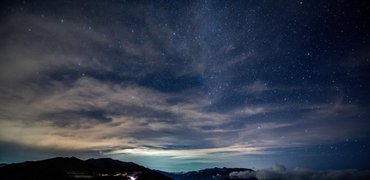
Use online light pollution maps, then visit local parks or countryside lanes. Always check access, safety and weather before travelling after dark.

Telescopes


-

Long established fact that a reader will be distracted
-

Long established fact that a reader will be distracted
-

Long established fact that a reader will be distracted


Lunar Phases
Karla Gleichauf
12 May 2017 at 05:28 pm
On the other hand, we denounce with righteous indignation and dislike men who are so beguiled and demoralized by the charms of pleasure of the moment
M Shyamalan
12 May 2017 at 05:28 pm
On the other hand, we denounce with righteous indignation and dislike men who are so beguiled and demoralized by the charms of pleasure of the moment
Liz Montano
12 May 2017 at 05:28 pm
On the other hand, we denounce with righteous indignation and dislike men who are so beguiled and demoralized by the charms of pleasure of the moment