

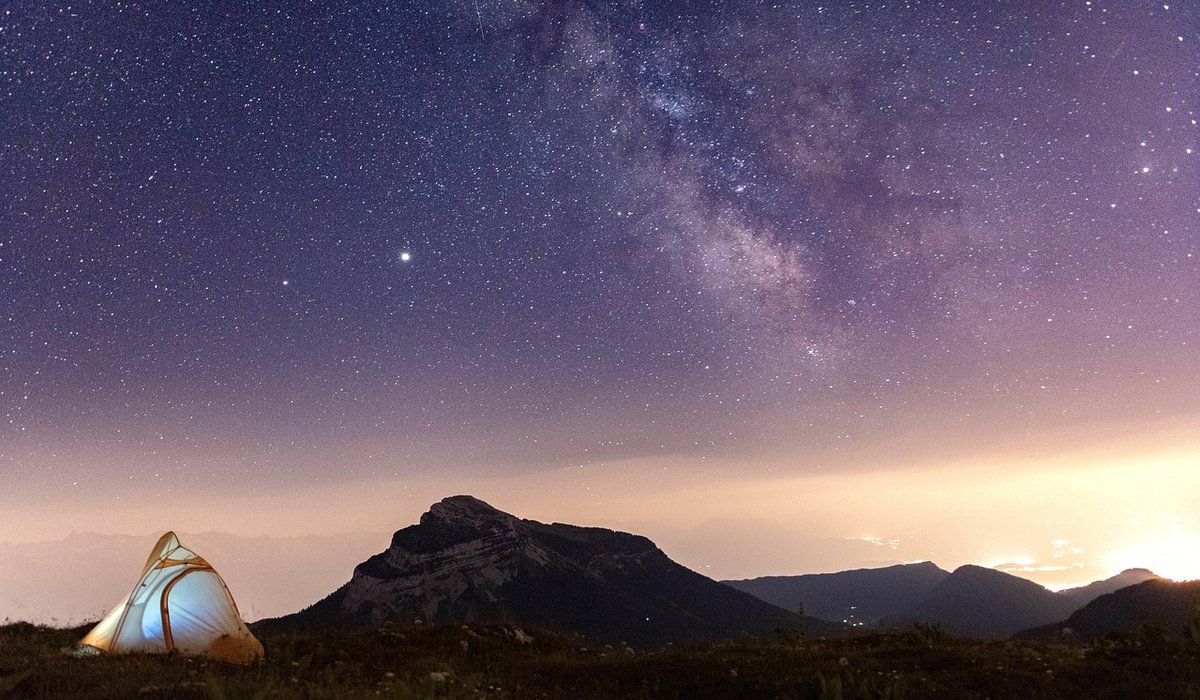
Using Filters to Improve Night Sky Contrast
Why Filters Matter Under British Skies
Anyone who has set up a telescope in a UK back garden knows the feeling. You wait for a clear night, haul everything outside, and then realise the neighbours' security light, the orange glow of a distant streetlamp, and the general haze of a town or city have washed out half the sky. The Moon itself can seem almost too bright to look at comfortably, while faint lunar craters and maria lose the delicate shading that makes them worth studying.
Filters are one of the simplest and cheapest upgrades you can make. They screw into the barrel of most eyepieces and take seconds to swap. Used sensibly, they cut glare, boost contrast, and let you see features that would otherwise be buried in light pollution or lunar brightness. They will not turn a suburban garden into a dark-sky site, but they can genuinely transform what your telescope shows you.
This guide is aimed at beginners with modest equipment, typically a 70mm to 150mm refractor, Maksutov, or Newtonian, observing from a town or village. We will look at what filters actually do, which ones suit lunar work, how to handle light pollution, and how to pick something sensible for your setup.
What Filters Actually Do (and What They Cannot)
A filter is simply a piece of glass that blocks or transmits certain wavelengths of light. By removing unwanted wavelengths, it increases the contrast between the features you want to see and the background glow you do not. That is the whole trick.
What filters cannot do is create light that is not there. If your sky is so washed out that you can barely see the Moon, no filter will reveal faint nebulae. They also cannot fix poor seeing, bad collimation, or a misted-up eyepiece. Think of them as contrast tools, not magic wands.
There are three broad families worth knowing as a beginner:
- Neutral density (ND) filters – reduce overall brightness without changing colour. Ideal for the Moon.
- Variable polarising filters – two rotating polarisers that let you dial brightness up or down. Very flexible for lunar work.
- Light pollution and contrast filters – selective filters that pass certain wavelengths and block others. Useful on some deep-sky objects, less so on the Moon.
For most UK beginners starting with lunar observing, the first two are where you should spend your money.
Lunar Filters: Taming the Brightest Object
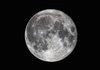
The Moon is the easiest target in the night sky and, ironically, one of the hardest to observe well. At high magnification, a full or gibbous Moon is dazzling. Your eye struggles to adapt, fine crater rims blur into white, and the subtle grey tones of the maria flatten out.
A neutral density filter is the classic solution. Kenko-style ND filters are sold in grades such as ND96 (25% transmission) and ND13 (13% transmission). For most 80mm to 130mm telescopes, an ND96 is a good starting point. If your aperture is larger or the Moon is particularly bright, a stronger grade helps more.
A variable polarising filter is arguably the better buy for a beginner. You rotate one half against the other to tune the dimming, so it works on a thin crescent and a full Moon without needing to buy a second filter. In practice, most observers settle on somewhere between 20% and 40% transmission for comfortable viewing.
Colour filters can also help. A light yellow or orange filter can sharpen the contrast of lunar rays and crater ejecta slightly, though the effect is subtle and some observers find the colour cast distracting. Try one before you commit.
Dealing with Light Pollution and Glare
UK skies are rarely truly dark, and even a modest streetlamp can ruin contrast. Broadband light pollution filters, sometimes called contrast filters, block some of the yellow-orange emission from sodium and the worst of modern LED spill. They are most useful on emission nebulae and some galaxies, and less helpful on the Moon because the Moon reflects a broad spectrum.
For lunar observation, a light pollution filter is largely unnecessary. The Moon is bright enough that you are fighting glare, not faintness. Where a light pollution filter does earn its keep is on brighter deep-sky objects such as the Orion Nebula or the Ring Nebula, particularly if you observe from a town.
If streetlight glare is your main problem, physical shielding is often more effective than any filter. A simple observing hood, a dark cloth over your head, or a dew shield extended forward can block stray light without costing much. Filters work best once you have already reduced the light hitting your eye.
A narrowband or UHC filter can be a nice second purchase if you enjoy nebulae, but do not rush into it. For a first filter, stick to lunar.
Choosing a Filter for Your Telescope and Site
The right filter depends on aperture and local conditions, so a little thought saves wasted money.
- Small telescopes (70–90mm) – a variable polarising filter is ideal. You can dim without losing too much light, and it suits the Moon and brighter planets.
- Medium telescopes (100–150mm) – an ND96 plus a variable polariser gives you options. The Moon at high power will still be bright, so the polariser earns its place.
- Larger telescopes (150mm+) – a stronger ND filter or a variable polariser set fairly dark will be more comfortable. You have plenty of light to spare.
- Heavily light-polluted sites – a light pollution filter for deep sky, plus a lunar filter for the Moon. Do not expect miracles from either.
- Dark rural sites – you may find you rarely need a light pollution filter, but a lunar filter is still worth owning for the Moon.
Also check the thread size of your eyepieces. Most are 1.25 inches with a standard filter thread, but some budget eyepieces and many 2-inch eyepieces differ. Measure before ordering, or buy from a retailer who lists thread sizes clearly.
Practical Tips for Better Lunar Views
Filters are only part of the picture. A few habits will improve your lunar observing as much as any accessory.
- Let your eyes dark-adapt for at least 15 minutes, though the Moon will partly undo this. Some observers use a red torch to preserve night vision between looks.
- Observe the terminator, the line between lunar day and night. This is where shadows are longest and crater relief is most dramatic.
- Wait for the Moon to be higher in the sky. Lower altitudes mean more atmospheric turbulence, especially over rooftops.
- Clean your optics gently. A smeared eyepiece scatters light and ruins contrast faster than any filter can fix.
- Try sketching what you see. It forces you to look carefully and you will notice far more detail than with a casual glance.
Start simple. A variable polarising filter and a little patience will show you the Moon as you have never seen it before, even from a UK back garden. Add a light pollution filter later if deep-sky observing becomes a passion. The sky rewards those who keep looking, and filters simply help you look a little more clearly.


Stargazing
-
Insulated clothing, a flask and a windbreak make cold sessions enjoyable. Position your chair so the telescope eyepiece stays within easy reach.

Telescopes


-

Long established fact that a reader will be distracted
-

Long established fact that a reader will be distracted
-

Long established fact that a reader will be distracted


Lunar Phases
Karla Gleichauf
12 May 2017 at 05:28 pm
On the other hand, we denounce with righteous indignation and dislike men who are so beguiled and demoralized by the charms of pleasure of the moment
M Shyamalan
12 May 2017 at 05:28 pm
On the other hand, we denounce with righteous indignation and dislike men who are so beguiled and demoralized by the charms of pleasure of the moment
Liz Montano
12 May 2017 at 05:28 pm
On the other hand, we denounce with righteous indignation and dislike men who are so beguiled and demoralized by the charms of pleasure of the moment