

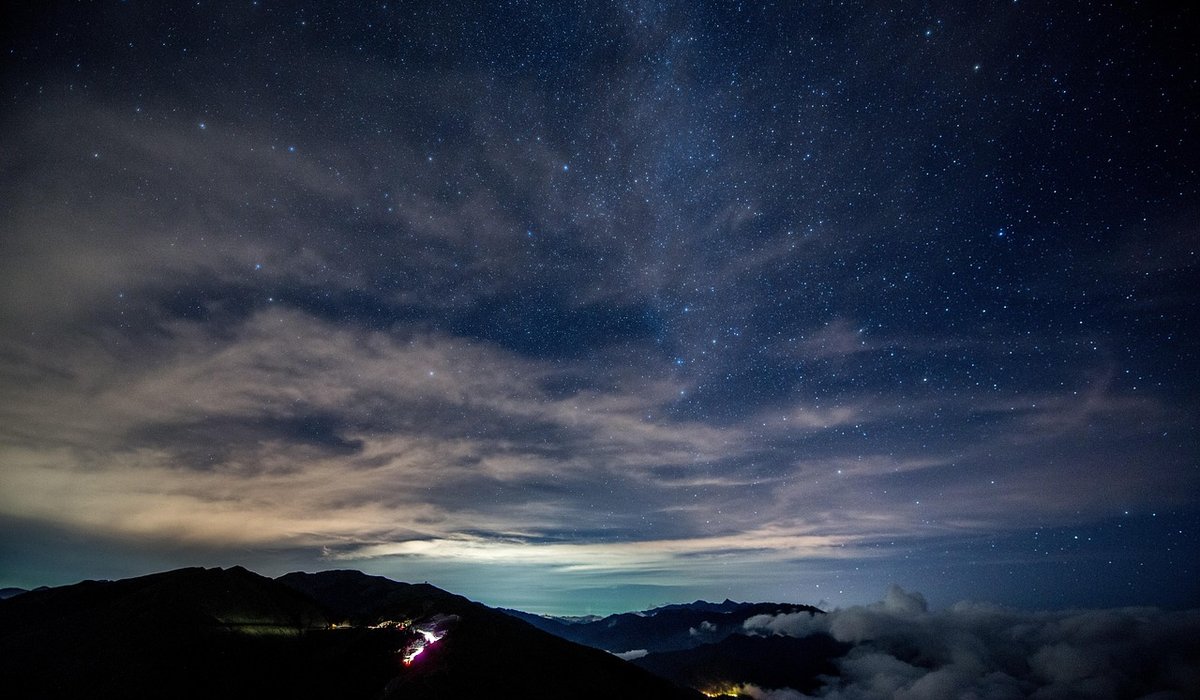
Reading Star Charts for Beginners in the UK
Start With the Horizon, Not the Stars
A star chart for the UK is a picture of the whole sky as a dome, and you have to treat it that way. The outer edge is your horizon, the middle is directly overhead, and the space between is height above the ground. Beginners often lay the chart flat on a table, then wonder why nothing matches. Hold it above your head instead and read it as though you were looking up at the inside of an umbrella.
Your latitude matters too. Britain runs from roughly 50° to 60° north, so a large part of the southern sky never rises here at all. Conversely, the constellations around Polaris — the Plough, Cassiopeia, Cepheus and Draco — never set, so you can learn them on any clear night of the year. That is a real advantage for beginners: the same trusted shapes are always available.
Find North and the Plough First
Before anything else, find north. A phone compass will do, or look for Polaris. The easiest route is the Plough, seven bright stars in Ursa Major, shaped like a saucepan with a bent handle. It is high on spring evenings and low in autumn, but always present.
Take the two stars at the outer edge of the pan, Dubhe and Merak, and follow the line upwards about five times the distance between them. You will land on Polaris. It is not spectacularly bright, so do not expect a beacon.
- Polaris sits at an altitude equal to your latitude: about 51° in London, 53° in Manchester, 56° in Edinburgh.
- A clenched fist at arm's length covers roughly 10°, so five fists up from the horizon is about right in southern England.
- Cassiopeia, a flattened W, lies on the opposite side of Polaris from the Plough and swings around it through the night.
Turn the Chart to Match the Sky
With north found, rotate your chart until the direction you are facing sits at the bottom edge. Face south, and south is at the bottom; face east, and east is at the bottom. Then hold it overhead. This one habit fixes most of the confusion beginners meet in their first fortnight.
Two further points. Charts flatten a curved sky, so patterns near the horizon look squashed compared with the printed version. And learn one pattern at a time — find the Plough, confirm it, then use its handle to arc to orange Arcturus and on to Spica. That is star hopping, and it is how everybody learns.
Let the Seasons Do the Work
The sky turns about a degree a night, which adds up to roughly two hours a month. Orion therefore owns winter evenings and has gone by midsummer, while the Summer Triangle of Vega, Deneb and Altair is high overhead in July and August. Autumn brings the Great Square of Pegasus, and with it the Andromeda Galaxy.
A planisphere — two rotating discs you set to date and time — solves the seasonal shift neatly and costs very little. Set it before you go outside, not after.
Star Hopping to Fainter Things
Brightness is measured in magnitudes, and the numbers run backwards: the lower the number, the brighter the star. Town skies might show you down to magnitude 4; a dark village, magnitude 6 or better. Allow twenty to thirty minutes for your eyes to adapt, and use a red torch or red phone screen if you need light.
- Begin with binoculars rather than a telescope — 8x40 or 10x50 pairs are easy to hold and show a great deal.
- Try the Pleiades in Taurus, the Orion Nebula below the belt, and Albireo, the gold-and-blue double star in Cygnus.
- Use averted vision: look slightly to one side of a faint object and it often appears, because peripheral vision is more sensitive in the dark.
Turning to the Moon
The Moon is the best first target in any garden and rewards a little timing. Avoid full Moon if you want detail. The week after first quarter and the week before last quarter give you a terminator — the line between sunlight and shadow — that throws craters into sharp relief.
With binoculars braced against a wall, you can pick out Copernicus, Tycho and the dark plains of Mare Tranquillitatis. Follow the terminator night by night and watch shadows shorten and crater floors fill with light. When the Moon is bright it washes out faint stars, so use those evenings for the Moon itself and keep deep-sky hunting for the fortnight around new Moon.


Stargazing
-
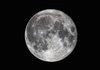
The Moon's cycle moves from new to crescent, quarter, gibbous and full. Each phase offers different shadows and detail for observers to enjoy.

Telescopes


-

Long established fact that a reader will be distracted
-

Long established fact that a reader will be distracted
-

Long established fact that a reader will be distracted


Lunar Phases
Karla Gleichauf
12 May 2017 at 05:28 pm
On the other hand, we denounce with righteous indignation and dislike men who are so beguiled and demoralized by the charms of pleasure of the moment
M Shyamalan
12 May 2017 at 05:28 pm
On the other hand, we denounce with righteous indignation and dislike men who are so beguiled and demoralized by the charms of pleasure of the moment
Liz Montano
12 May 2017 at 05:28 pm
On the other hand, we denounce with righteous indignation and dislike men who are so beguiled and demoralized by the charms of pleasure of the moment