


Viewing a Lunar Eclipse from Your Garden
Why the Moon Turns Red
A lunar eclipse is the most forgiving astronomical event you can watch. It happens when Earth slides directly between the Sun and the Moon, so that the Moon passes through our planet's shadow. Unlike a solar eclipse, there is nothing dangerous about looking at it — no filters, no special glasses, no squinting. You can watch the whole thing with your own eyes from a garden chair, and you will still see something genuinely striking.
Earth's shadow has two parts. The outer one, the penumbra, is faint and dusty; the inner one, the umbra, is dark and defined. When the Moon first touches the umbra, it looks as though a small bite has been taken out of it. But here is the lovely part: the Moon never goes completely black. Sunlight passing through Earth's atmosphere is bent and scattered, and only the red end of the spectrum makes it through. That light lands on the Moon and paints it copper, rust or brick red — the same physics that gives us a fiery sunset, projected onto a world 384,000 kilometres away.
When to Look, and Where
Lunar eclipses only happen at full Moon, which is fortunate, because a full Moon is easy to find. Because it sits opposite the Sun, it rises in the east just as the Sun sets in the west. That means the early stages of an evening eclipse are best seen low over the eastern horizon, and that is exactly where a garden can be a frustrating place to stand, with next door's conifer in the way.
Totality — the fully red phase — can last anywhere from a few minutes to around an hour and forty minutes, and the whole event from first contact to final exit often runs to several hours. The main obstacle in the UK is not light pollution and it is not the time of night. It is cloud. Keep an eye on the forecast and be prepared to be flexible, because a clear gap of twenty minutes is all you need.
Choosing Your Spot in the Garden
Scope out your viewing position a few days beforehand, at the same time of evening the eclipse will be underway. You want the lowest, clearest view of the eastern sky you can manage. A few practical suggestions:
- Walk to the top of the garden, or the far end of an allotment, where roofs and hedges are less likely to block a low Moon.
- An upstairs window facing east is a perfectly respectable fallback, and much warmer.
- Streetlights and security lights hardly matter for the Moon, which is bright enough to cut through almost anything. If a nearby lamp is annoying, shade it with your hand or pull a hood over your head like a photographer's cloth.
- Avoid glancing at your phone. It takes several minutes for your eyes to readjust, and during totality you will want every bit of sensitivity you have.
- If you can, note where the Moon rises from your chosen spot so you are not hunting around in the dark later.
What You Will See, Stage by Stage
The sequence unfolds slowly enough that you can pop inside for a cup of tea and not miss much. Roughly, this is the order of play:
- Penumbral stage. A subtle dimming across the Moon's face. Many people miss it entirely, and there is no shame in that.
- First bite. A dark notch appears on one edge. The curve of that notch is the curve of Earth itself — a nice thing to point out to children.
- Partial phase. The shadow creeps across, and the eclipsed portion deepens from grey to a rich rust colour.
- Totality. The whole Moon sits inside the umbra and glows a dull copper. Fainter stars appear around it, and the sky feels oddly altered.
- Retreat. The shadow slides away, brightness returns, and the Moon ends up as ordinary as it started.
What Kit You Actually Need
Nothing. That is the honest answer, and it is why lunar eclipses are the perfect entry point for anyone new to astronomy. If you already own a pair of binoculars — 7x50 or 10x50 are ideal — bring them out, because they show the colour variations across the lunar surface beautifully and will reveal craters along the shadow's edge. Rest them on a fence post or a garden wall to keep the view steady. A small telescope is a bonus, not a requirement, and it will narrow your field of view so much that you may prefer the naked-eye version anyway.
Staying Warm and Sticking It Out
Eclipses are a test of patience more than eyesight. You will be standing still in the cold for a long time, so dress as though you were going to a winter football match: thermal layers, a thick coat, hat, gloves, and boots rather than trainers. A flask of something hot, a folding chair, a blanket and a hot water bottle will transform the experience. If totality is due at two in the morning, set an alarm and sleep beforehand rather than trying to stay up. And if you have neighbours, children or friends who might be curious, invite them out. The sight of Earth's shadow crossing the Moon is one of the few pieces of astronomy that reliably makes people go quiet, and it is far better shared.


Stargazing
-
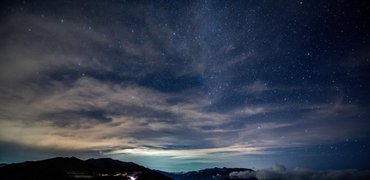
Lie back, let your eyes adapt and look up without focusing on one spot. Patience is essential, as meteors arrive in unpredictable bursts.
Telescopes


-

Long established fact that a reader will be distracted
-

Long established fact that a reader will be distracted
-

Long established fact that a reader will be distracted


Lunar Phases
Karla Gleichauf
12 May 2017 at 05:28 pm
On the other hand, we denounce with righteous indignation and dislike men who are so beguiled and demoralized by the charms of pleasure of the moment
M Shyamalan
12 May 2017 at 05:28 pm
On the other hand, we denounce with righteous indignation and dislike men who are so beguiled and demoralized by the charms of pleasure of the moment
Liz Montano
12 May 2017 at 05:28 pm
On the other hand, we denounce with righteous indignation and dislike men who are so beguiled and demoralized by the charms of pleasure of the moment