


Why the Moon Changes Shape Through the Month
The Short Answer: Sunlight and Shadow
The Moon doesn't make its own light. It shines because sunlight bounces off its dusty, rocky surface. As the Moon orbits Earth, the angle between the Sun, the Moon and your garden changes. Sometimes we see the fully lit face, sometimes a sliver, sometimes nothing at all. That changing angle is the whole story of lunar phases.
It takes about 29.5 days for the Moon to go from one new moon to the next. That's slightly longer than the Moon's actual orbit around Earth (27.3 days) because Earth is also moving around the Sun. For a beginner in the UK, all you need is a clear night, a pair of binoculars if you have them, and a little patience with the weather.
The Eight Phases (and What They Look Like)
Astronomers divide the cycle into eight phases. You can see them all with your naked eye, though a small telescope or binoculars will reveal craters along the boundary between light and dark. That boundary is called the terminator, and it's the best place to look for detail.
- New Moon: The Moon is between Earth and the Sun, so its lit side faces away from us. It's invisible in the daytime glare, though you might spot it during a solar eclipse.
- Waxing Crescent: A thin sliver of light appears in the west just after sunset. "Waxing" means growing.
- First Quarter: Half the Moon is lit, with the right-hand side bright (as seen from the UK). It rises around midday and sets around midnight.
- Waxing Gibbous: More than half is lit, but not fully round. Great for evening viewing.
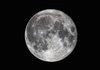
- Full Moon: The entire face is illuminated. It rises at sunset and stays up all night.
- Waning Gibbous: The lit portion begins to shrink. "Waning" means decreasing.
- Last Quarter: Half lit again, but now the left-hand side is bright. It rises around midnight and sets around midday.
- Waning Crescent: A thin sliver in the east before sunrise, then the cycle begins again.
Why the Moon Rises at Different Times
This is one of the most practical things to understand for garden observing. The Moon rises roughly 50 minutes later each day. So if you look at the same time each evening, you'll see it shift eastwards against the stars and change phase. A full moon is opposite the Sun, so it rises as the Sun sets. A first quarter moon is 90 degrees east of the Sun, so it's high in the south at sunset. A waning crescent is 90 degrees west of the Sun, so it rises in the early hours.
In the UK, our latitude means the Moon's path across the sky changes with the seasons. In winter, a full moon climbs high and stays up for many hours. In summer, it hugs the southern horizon and can be surprisingly low. That's not the Moon changing—it's just geometry and Earth's tilt.
Tracking the Phases from Your Garden
You don't need expensive equipment. A notebook and a pencil are enough to start a lunar diary. Here's a simple routine that works well in British weather:
- Pick a time you can commit to, say 9pm, and look for the Moon every clear night.
- Sketch its shape and note where it is in the sky. Use a landmark like a chimney or a tree to help.
- Note the date and time. After a month, you'll have a personal record of the whole cycle.
- Use binoculars to look along the terminator. You'll see shadows cast by mountains and crater walls, especially during crescent and quarter phases.
- On clear, dark nights, look for earthshine—the faint glow of the dark part of the crescent Moon. That's sunlight reflected off Earth.
Light pollution in towns and cities washes out faint stars, but the Moon is bright enough to cut through. A garden facing east or west gives you the best chance to catch rising or setting moons.
A Few Surprises for Beginners
The Moon is visible in daylight more often than you might think. A waxing gibbous or first quarter moon can be spotted in a blue afternoon sky if you know where to look. Also, the Moon doesn't rotate on its axis relative to Earth—it's tidally locked, so we always see the same face. The far side isn't dark; it gets just as much sunlight, we just never see it from home.
Another surprise: the Moon appears larger near the horizon. This is the Moon illusion, a trick of the brain. Photographs show it's the same size. It's still lovely to see a huge orange moon rising over the rooftops, though.
Making the Most of Each Phase
Different phases suit different observations. Here's a quick guide:
- Crescent moons: Best for earthshine and for seeing the Moon with bright planets like Venus or Jupiter nearby.
- Quarter moons: Ideal for craters along the terminator. The shadows are long and dramatic.
- Gibbous and full moons: Great for seeing the whole face, bright rays from craters like Tycho, and the dark patches called maria. A full moon is very bright; use a moon filter on a telescope if you have one.
Keep a warm flask, a red torch to preserve your night vision, and a bit of patience. British weather will interrupt your lunar diary, but that's part of the charm. Over a few months, you'll start to predict where the Moon will be and what shape it will take. That's when garden astronomy really begins to feel like a conversation with the sky.


Stargazing
-
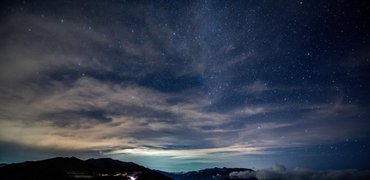
Moonrise and moonset times shift daily, so plan sessions around them. A low horizon helps you catch crescent moons in twilight.

Telescopes


-

Long established fact that a reader will be distracted
-

Long established fact that a reader will be distracted
-

Long established fact that a reader will be distracted


Lunar Phases
Karla Gleichauf
12 May 2017 at 05:28 pm
On the other hand, we denounce with righteous indignation and dislike men who are so beguiled and demoralized by the charms of pleasure of the moment
M Shyamalan
12 May 2017 at 05:28 pm
On the other hand, we denounce with righteous indignation and dislike men who are so beguiled and demoralized by the charms of pleasure of the moment
Liz Montano
12 May 2017 at 05:28 pm
On the other hand, we denounce with righteous indignation and dislike men who are so beguiled and demoralized by the charms of pleasure of the moment