

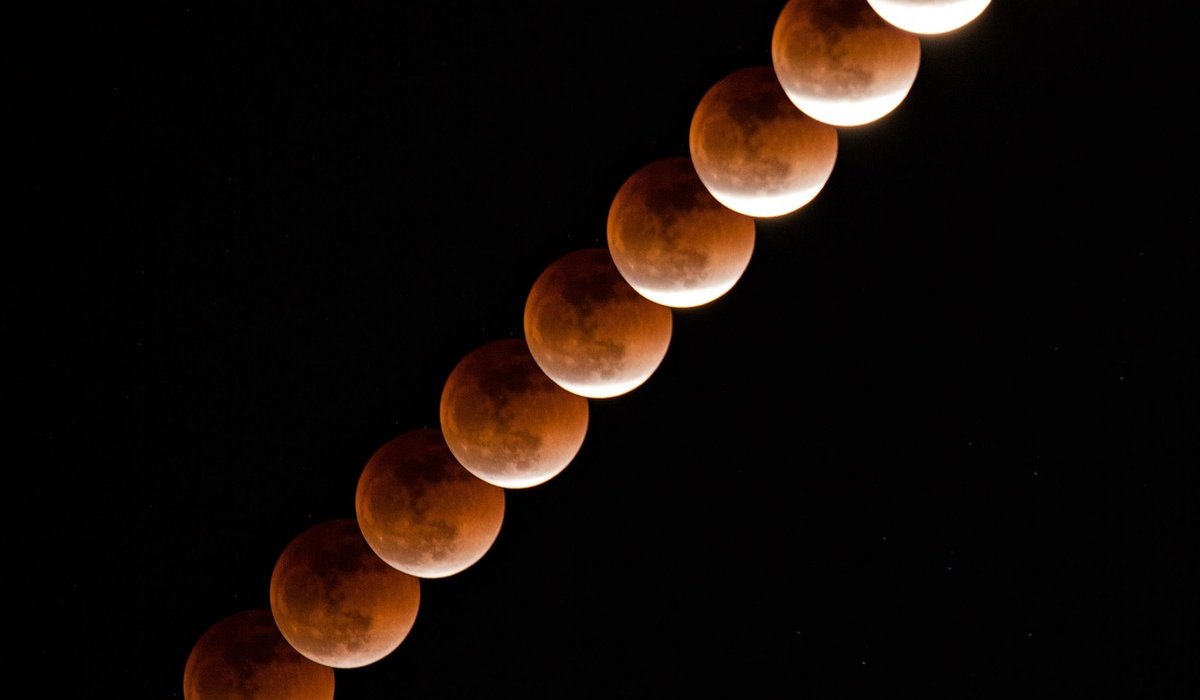
Steadying Binoculars Without a Tripod at Night
Why Binoculars Shake More Than You Expect
Hand a pair of 10x50s to someone in daylight and they will hold them rock steady. Hand the same binoculars to the same person at midnight and everything wobbles. Magnification multiplies every small movement, and at night your body is doing far more of it: you are cold, you are often standing awkwardly, and you are leaning back to look at something high overhead, which is exactly the position your arms are worst at holding.
The maths is unforgiving. At 8x, a tremor of half a degree in your hands becomes four degrees of apparent movement in the eyepiece — wider than the full Moon. Your pulse alone, beating away at 60 to 80 times a minute, is enough to make a crater rim shiver. Add a bit of shuffling and a long, cold wait and the view becomes a smear of grey rather than a landscape.
This is why comfort is not a soft extra you get round to eventually. Steadiness is the single biggest upgrade you can make to a beginner's lunar viewing, and it costs nothing but a bit of thought about where you put your elbows.
Use the Garden as a Support
Your garden is full of free tripods if you look at it properly. A fence post, a gatepost, the corner of a shed, a wall, a washing line pole, a mature tree trunk — anything vertical and solid will do.
- Stand at a slight angle to the post rather than straight on, so your shoulder or upper arm presses against it.
- Tuck your elbows in against your ribs and let the heel of one hand rest on a fence rail or gate top, using it as a shelf.
- Shift your weight so the structure is carrying you, not your arms. If your shoulders are doing the work, you will start drifting within a minute.
- Keep one foot slightly forward and your knees soft. Locked knees send every sway straight up into the eyepieces.
For low targets near the horizon — a rising Moon, Jupiter in the south — standing bracing works well. For anything higher, it starts to strain your neck and the steadiness goes with it.
Lie Back and Let the Ground Take the Weight
For lunar observing this is the position that beats almost everything else. Lie on a picnic blanket, a sun lounger or a reclining garden chair with a rolled towel or cushion under your neck. Bend your knees so your lower back is comfortable, and bring the binoculars to your eyes rather than lifting your head to them.
Two things to remember in a British garden. First, the ground pulls heat out of you quickly even in summer, so put a mat or spare blanket underneath. Second, the eyecups resting gently against your brow make a huge difference — your skull becomes the mount, and your arms only have to hold the weight, not fight the movement. In this position a beginner can often see the same detail that a shaky standing observer misses entirely.
Monopods, Beanbags and Improvised Rests
A full tripod is awkward for binoculars because you still need to get your eye to the eyepiece, but a monopod is a genuine sweet spot. A single lightweight pole, ideally with a small ball head on top, takes the weight and kills the vertical bounce while leaving you free to swing the binoculars around the sky. Some walking poles and hiking sticks accept a camera thread adapter, and a monopod doubles as a walking aid on the way out to the end of the garden.
If you would rather not buy anything, improvise:
- A drawstring bag of rice or dried beans makes an excellent beanbag. Drape it over a fence post, a gate, a wheelie bin lid or the top of a step ladder and settle the binoculars into it.
- A stack of firm cushions on a garden table gives you a raised, padded rest at a comfortable height.
- A folded fleece or thick towel over a fence rail softens the surface and stops the binoculars sliding.
- A garden chair with a high back lets you rest your elbows on the arms — a surprisingly effective halfway house between standing and lying down.
Grip, Breath and a Steady Hold
How you hold the binoculars matters as much as what you are leaning on. Wrap your hands around the barrels near the far end, with your index fingers hooked lightly over the front rims and your thumbs under the eyepieces. Bring the eyecups up until they touch your brow, then stop — pressing hard makes your pulse visible.
Breathing is the other half of the trick. Breathe in, breathe out, then take a half breath in and pause gently at the top. In that quiet second or two the view settles. This is the moment to look, not the moment to hunt for the target. Find your object first with normal breathing, then steady yourself and study it.
Give your arms a rest every few minutes. Put the binoculars down, look away, roll your shoulders. Fatigue tremor creeps in long before you notice it, and a two-minute break will buy you another ten minutes of clear viewing.
What Steadiness Looks Like on the Moon
As a test of your setup, look along the terminator — the line between lunar day and night. A steady view shows a ragged edge of peaks and shadows, and small craters sitting on the boundary like pockmarks. If the whole rim is shimmering and doubling, you need more support, not more magnification.
At full Moon, try the bright ray systems splashing out from the southern highlands; with a good brace they resolve into distinct streaks rather than a fuzzy glow. Away from the Moon, the four brightest moons of Jupiter lined up beside the planet, or the separate stars of the Pleiades, make excellent steadiness tests. When those pinpricks hold still for several seconds at a time, you have found your position — and you will be able to see far more than you did standing in the middle of the lawn.


Stargazing
-
Use a tripod, low ISO and a fast shutter speed to capture lunar detail. Avoid overexposing the bright surface by adjusting settings manually.
Telescopes


-

Long established fact that a reader will be distracted
-

Long established fact that a reader will be distracted
-

Long established fact that a reader will be distracted


Lunar Phases
Karla Gleichauf
12 May 2017 at 05:28 pm
On the other hand, we denounce with righteous indignation and dislike men who are so beguiled and demoralized by the charms of pleasure of the moment
M Shyamalan
12 May 2017 at 05:28 pm
On the other hand, we denounce with righteous indignation and dislike men who are so beguiled and demoralized by the charms of pleasure of the moment
Liz Montano
12 May 2017 at 05:28 pm
On the other hand, we denounce with righteous indignation and dislike men who are so beguiled and demoralized by the charms of pleasure of the moment