


Capturing Star Trails from a Suburban Garden
Why Your Suburban Garden Is Better Than You Think
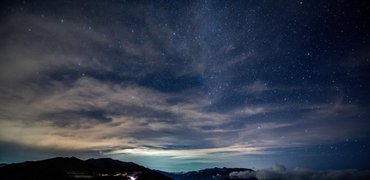
You might assume that serious astronomy requires a dark-sky site miles from anywhere. Not so. Star trails are less about pristine darkness and more about patience and technique. From a typical UK back garden, even with a sodium or LED streetlight glowing at the end of the road, you can capture beautiful arcs of light. The trick is to take many short exposures and stack them later. This keeps the sky from washing out, because each individual frame collects only a little light pollution. The final image, blended together, reveals smooth, continuous trails that would be impossible in a single long exposure.
The Kit You Actually Need
You do not need a telescope. A camera with manual controls – a DSLR or mirrorless model – is ideal. Pair it with a sturdy tripod, because any wobble will ruin your trails. A remote shutter release or an intervalometer is essential; you cannot touch the camera between frames. A wide-angle lens (anything from 18mm to 35mm on a full-frame camera, or 12mm to 24mm on a crop sensor) gives you a generous view of the sky. Fast apertures help, but f/4 is perfectly usable. Finally, dress warmly. A clear UK night in spring or autumn can drop to near freezing, and you will be standing still for an hour or more.
- Camera with manual mode and RAW file support
- Sturdy tripod – weight it down if it is breezy
- Intervalometer or remote shutter release
- Wide-angle lens (18–35mm equivalent)
- Spare batteries and memory cards
- Red torch, flask, gloves, hat
Choosing Your Spot and Framing the Shot
Point your camera away from the brightest streetlights. If a lamp is behind you, its glare will not fall on the lens. Look for a composition that includes a silhouette: a tree, a roof ridge, a fence, or a chimney pot. This gives a sense of place and anchors the swirling stars. In the northern hemisphere, facing north (towards Polaris) gives you tight, circular trails around the celestial pole. Facing east or west produces longer, diagonal streaks. Avoid nights when the Moon is more than half full; its light will wash out faint stars and add an uneven glow. Check the forecast for clear skies and low humidity.
Camera Settings for Smooth Trails
Switch to manual mode. Set your aperture between f/2.8 and f/4 – wide enough to gather light, but stopped down slightly to sharpen stars at the edges. Use an ISO of 800 to 1600. Your shutter speed should be 15 to 30 seconds. Any longer and the sky background may brighten too much from light pollution. Set the interval between shots to just one second longer than your exposure time (for example, 21 seconds if you are shooting 20-second frames). This avoids gaps in the trails. Focus manually: use live view, zoom in on a bright star, and turn the focus ring until it is a tiny pinpoint. Turn off image stabilisation and long-exposure noise reduction.
- Start with 20 seconds, f/4, ISO 1600
- Check your histogram – the peak should sit left of centre
- Shoot 100–200 frames for a good trail (about 30–60 minutes)
- Use a fresh battery and format your card beforehand
Stacking Your Frames into One Image
Once you are home with cold fingers and a full memory card, transfer the files to your computer. You will need stacking software – many free programs exist that blend images using a lighten or maximum mode. Load all your frames, align them if the software offers that option (though a fixed tripod means they should already match), and let it stack. The result is a single image with smooth, unbroken trails and far less noise than any individual frame. Afterwards, open the stacked file in your usual editing software. Increase contrast, adjust colour balance, and use a healing brush to remove any aircraft or satellite streaks. Save as a high-quality JPEG for sharing.
Troubleshooting Common Suburban Problems
Light pollution creates an orange or grey gradient across the sky. You can reduce it by shooting when the streetlights are dimmest, or by carefully darkening the sky in editing. Dew is a frequent nuisance; wrap a hand warmer around the lens barrel with an elastic band, or buy a simple dew heater. If you see gaps in your trails, your interval is too long – shorten it. Aircraft and satellites will leave straight lines; you can either clone them out or leave them as a reminder of the busy sky above. Finally, be patient. Your first attempt may be noisy or dim, but each session teaches you something new. The stars, after all, are not going anywhere.


Stargazing
-
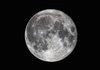
Adjust contrast and clarity gently, keeping craters looking textured rather than artificial. Over-sharpening creates halos that ruin the Moon's subtle shading.

Telescopes


-

Long established fact that a reader will be distracted
-

Long established fact that a reader will be distracted
-

Long established fact that a reader will be distracted


Lunar Phases
Karla Gleichauf
12 May 2017 at 05:28 pm
On the other hand, we denounce with righteous indignation and dislike men who are so beguiled and demoralized by the charms of pleasure of the moment
M Shyamalan
12 May 2017 at 05:28 pm
On the other hand, we denounce with righteous indignation and dislike men who are so beguiled and demoralized by the charms of pleasure of the moment
Liz Montano
12 May 2017 at 05:28 pm
On the other hand, we denounce with righteous indignation and dislike men who are so beguiled and demoralized by the charms of pleasure of the moment